checklist
What should be on my checklist in the eight weeks before our spring recital day?
A week by week list running from costume arrival through strike, covering theater logistics, backstage staffing, tickets, rehearsal order and the paperwork that has to be done before anyone steps on stage.
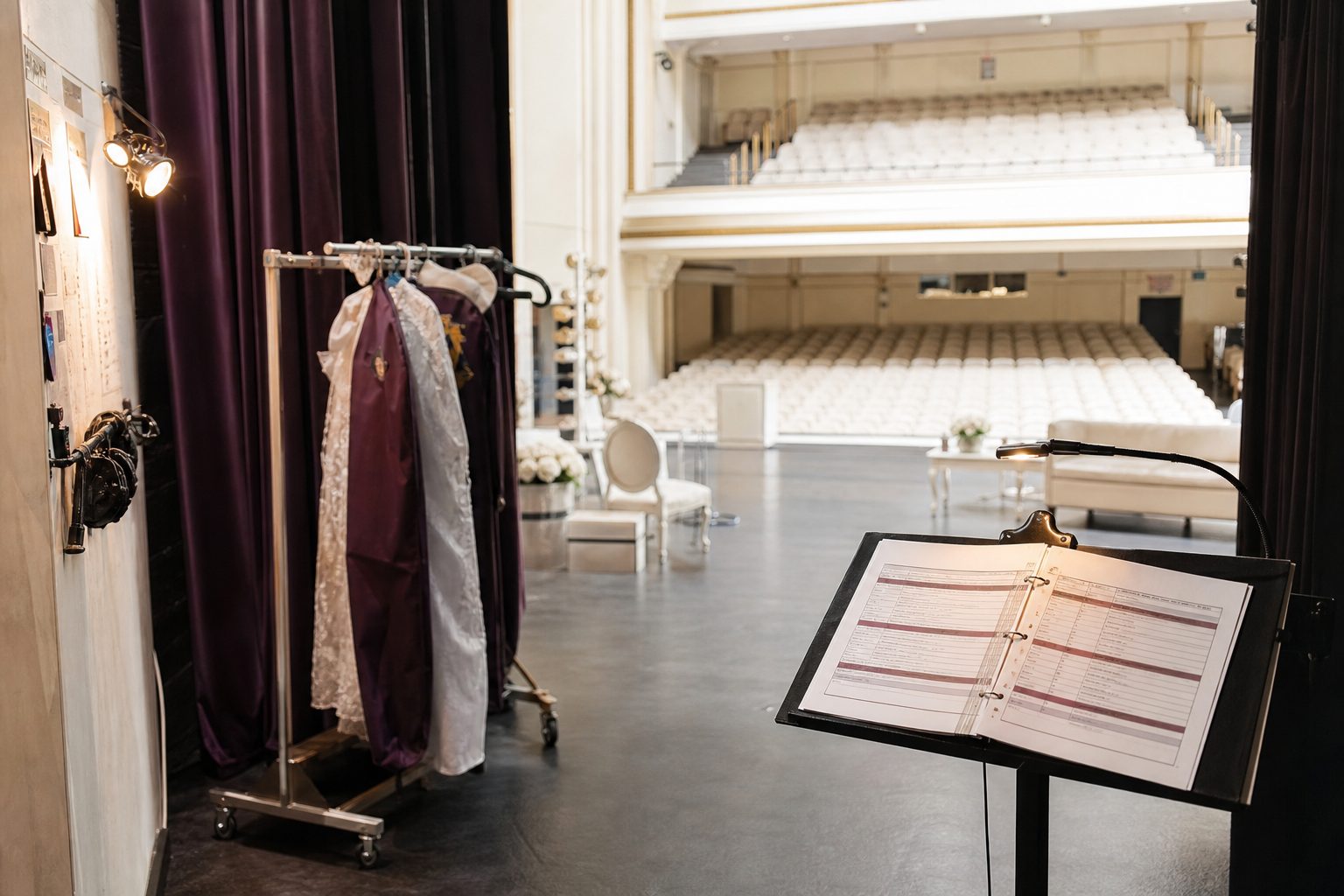
Eight weeks out, your checklist has four jobs: lock the building, land the costumes, fix the running order, and tell families what to do. Everything else on recital day is downstream of those four. If you sequence them in that order, the last week is logistics instead of triage.
The list below runs backward from show day. It assumes one performance day, a rented auditorium or high school theater, roughly 150 to 300 dancers across recreational and pre-professional classes, and a small paid staff supplemented by parent volunteers. Scale the volunteer numbers up or down, but keep the sequence. The order matters more than the dates, because each week produces the input the next week needs.
Print it. Put a name next to every line. A checklist without an owner is a wish.
Week eight: theater contract, technical needs and insurance certificate
Pull the signed venue contract and read it again, not from memory. You are looking for five specific things: the exact hours you have the building, whether load in is inside those hours or billed separately, whether the house requires you to hire their crew, the ticketing terms, and the insurance language.
The insurance clause is the one that stalls people. Most theaters want a certificate of insurance naming the venue as additional insured, with a specific limit, delivered by a specific date. Call your agent this week. A certificate takes a day or two, but only if you ask in week eight instead of week two, and a missing certificate is one of the few things that will actually keep you out of the building.
The technical rider you should be writing now
Send the technical director a plain document with: number of pieces, approximate run time, whether you need a cyclorama or a marley dance floor laid, wing space needed, whether you are using haze or fog, whether any piece uses a prop that touches the fire code, and how your music will arrive. If the house has a marley floor, ask who lays it and whether that labor is in your quote. Laying and pulling marley on a big stage is real hours.
- Confirm the number of dressing rooms and whether they lock.
- Ask whether the house has a monitor feed to dressing rooms, or whether you need runners calling groups.
- Ask about the loading dock: height, door width, and whether you need a key or an escort.
- Confirm what happens if you run over your contracted hours, and at what rate.
Keep reading: How much of my recital fee actually covers the theater, and where does the rest go?
Week seven: costume arrival, check in and shortage claims
Costumes should be in your hands, or at least tracked and dated, by now. Open every box the day it arrives. Not the week you need them.
Check in against your order by class, not by dancer. Count units per style and per size, then reconcile that count to your sizing roster. Two numbers that should match: how many size CS you ordered for a class, and how many dancers in that class are assigned CS. When they do not match, you have either a shipping shortage or a sizing record that changed after the order went in.
Most costume vendors have a claim window measured in days from delivery, not from your recital. A missing tutu found in week seven can be replaced. The same tutu found in week two is a shopping trip and a substitution. Photograph the packing slip, note the discrepancy in writing, and file the claim the same day.
The alterations pile
Sort every class into three bins as you check in: fits, needs hemming or strap shortening, needs an exchange. The middle bin goes home with a written note and a deadline. The third bin is your problem, and you want to know its size in week seven, not week three.
Week six: running order, program copy and music files
Now build the show. A running order is not an artistic document first, it is a costume change document. The constraint is simple: no dancer should have to change costumes in less than roughly three numbers, and any dancer in two consecutive pieces has to be wearing the same thing or you need a quick change plan with a helper assigned by name.
Build it by listing every dancer's pieces, then sorting for the youngest classes early. Four year olds who go on at 8:40 pm have already peaked. Put them in the first fifteen minutes and let their families leave if they need to.
Program copy is due the same week because printing has a lead time. Freeze the cast list on a stated date and tell families that date. Names added after it go on an insert or nowhere. Every studio owner has learned this the expensive way at least once.
Music files: one folder, one naming convention, one format. Number them in show order, so the file name itself carries the position: 01, 02, 03. Deliver a copy to the sound operator and keep a copy on a device you carry. Edited tracks should be final, with the fade already in the file. Nobody is fading live from a laptop on your show day.
Week five: ticketing, seating and the will call plan
Decide three things and publish them together: whether seating is reserved or general, how many tickets each family may buy in the first window, and how tickets are collected.
Reserved seating stops the line forming at 5 am and stops the resentment that follows. It costs you a seat map and a little setup time. General admission is simpler to sell and harder to police. If you run general admission, at least rope off a section for families with a dancer in the opening number, because those parents are backstage while the doors open.
Set a per family cap in the first sales window, then open the remainder unlimited a week later. That single move prevents the family that buys 22 seats before anyone else has bought two.
Will call is where day of chaos concentrates. If you can, sell digital only and have families show a phone. If you must do will call, alphabetize by purchaser last name, staff it with two people, and open it thirty minutes before the house does.
Keep reading: What actually happens on placement day when I move dancers up a level in ballet?
Week four: backstage volunteers, ratios and check in procedure
Backstage staffing is the single line that separates a calm show from a bad one. Work in ratios and write them down.
| Dancer age | Adults per group | What they actually do |
|---|---|---|
| 3 to 5 | 1 per 4 | Bathroom, tears, staying seated, hand off at the wing |
| 6 to 8 | 1 per 6 | Costume order, shoes, lining up in the right spot |
| 9 to 12 | 1 per 8 | Quick changes, hair fixes, keeping the room quiet |
| 13 and up | 1 per 12 | Call times, headcount, phone policy |
Recruit more than you need, because roughly one in five volunteers discovers a conflict in the final two weeks. Anyone backstage with children who are not their own should be screened according to whatever your state and your insurance require. Ask your carrier what they expect before you build the list, not after.
Write a one page check in procedure: where dancers are dropped, who signs them in, what they bring, what they may not bring, and the single rule that no child leaves backstage with anyone but the adult who signed them in. Hand that page to every volunteer and every family.
Week three: dress rehearsal schedule and studio photo day
Dress rehearsal is a technical rehearsal that happens to have costumes in it. Publish a timed schedule by class with arrival, stage time, and release. Staggering it saves you four hours of a hundred children sitting in an auditorium.
Run each piece twice if the schedule allows: once for spacing and once for lights and sound. Spacing on a stage that is wider or shallower than your studio is the thing that goes wrong, and it is fixable in ten minutes if you catch it here.
Photo day is a separate event and should stay separate. Running photos at dress rehearsal produces a hundred children in makeup waiting three hours. If you must combine them, photograph each class immediately after its stage run and release it.
See how TutuTerm handles this for dance and ballet schools
Week two: parent communication packet and arrival times
One document, sent once, in the same format every year. Families will read one thing. Make that thing complete.
- Dancer call time and door, per class, with the door number or name.
- Hair and makeup: exact bun position, exact tights color and brand, exact shoe.
- What goes in the labeled bag: costumes in order, spare tights, hairpins, snack, water.
- What stays home: jewelry, phones, nail polish, glitter if your venue bans it.
- House open time, show start, approximate end time.
- The pickup rule, restated.
- Costume return policy if any pieces are rented.
Send it as text in the message body as well as an attachment. Attachments do not get opened on phones in a parking lot.
Recital week: load in, run of show, strike and costume return
Load in with a list, not a truck full of guesses. Backdrop, props, first aid kit, sewing kit, safety pins, hairspray, extra tights in the three most common sizes, a labeled bin per class, and printed run of show copies for stage manager, sound, lights and each backstage lead.
The run of show is a single page: piece number, class name, dancer count, entrance side, music cue, and next piece. The stage manager runs the show off it. You do not.
Assign strike before the show, not after. Every parent leaves the second the curtain drops. Name six people who stay, tell them what they are carrying and where it goes, and get the building empty inside your contracted hours. Going over on strike is the most avoidable overtime charge in the entire budget.
Where the checklist lives after this year
The reason recital season feels like eight weeks of unpaid administration is that most of the inputs, class rosters, costume sizes, fee status, contact details, live in different places and have to be reconciled by hand. TutuTerm keeps term enrollment, per dancer costume sizing and staged recital fee billing in one place, so the rosters you build your running order from are the same rosters you sized costumes against and billed fees from. Set it up before the season starts, and week seven becomes a count instead of an investigation.
Read also
How much of my recital fee actually covers the theater, and where does the rest go?
A recital fee is not profit. Break it into venue rental, technical labor, licensing, costumes, printing and staffing so you can defend the number to parents and know your true margin.

What actually happens on placement day when I move dancers up a level in ballet?
An hour by hour account of a placement session at a children's ballet school: what faculty watch for, how classes get balanced afterward, and how results reach families without a week of appeals.

How do I set term tuition for my ballet school when families want to pay monthly instead?
Term pricing and monthly billing are two different decisions. Here is how to price a full term of classes, then split that number into even installments without losing revenue to short months or holiday weeks.