trends and outlook
Is a competition team the direction my recreational ballet school should be heading next?
Competition programs raise revenue per family and raise cost, staffing and calendar pressure with it. A clear look at what a team changes in a recreational school built around term classes and one spring recital.
Probably not yet, and the reason is capacity rather than ambition. A competition team is not a program you add on top of a recreational school. It is a second business with its own calendar, its own staffing pattern and its own parent expectations, running inside the same building and mostly the same weeks as the first one.
The test is simple to state and uncomfortable to apply. If your recreational classes are not full, if your studio rooms are already booked most weekday evenings, or if you have no second person who can run a rehearsal weekend without you, a team will subtract from what is working rather than add to it.
Where a team genuinely fits is a school with unfilled evening hours, a waiting group of dancers already taking four or more classes a week, and at least one faculty member who wants to choreograph and travel. That combination is worth pursuing. Here is what it changes.
What a competition season adds to the studio calendar
Your current year has one performance peak: spring recital, with tech week and dress rehearsal in a compressed stretch, and a natural quiet period from September through December.
A team fills that quiet period and then collides with the loud one. Choreography typically starts in August or September. Cleaning rehearsals run weekly from October. Regional competition season in most of the country runs February through April, with two to four regional events, and nationals in late June or July. Conventions, if you attend them, take weekends in the fall and winter.
The collision is March and April. That is when regionals stack up and when recital choreography, costume fittings and program deadlines all need attention. A team season does not end and then hand you the recital. The two overlap by roughly eight weeks, and every one of those weekends is a weekend you are not in the building.
Keep reading: What should be on my checklist in the eight weeks before our spring recital day?
Family cost stack: entry fees, travel, choreography, extra costumes
Parents hear the tuition number and stop. The full number is several times larger, and if you do not present it plainly at the start you will spend the season absorbing the difference.
Build it in front of them. A worked example for one dancer in three routines, using assumptions you should replace with your own regional quotes:
| Line | Assumption | Season cost |
|---|---|---|
| Additional required technique classes | 3 extra hours weekly, 34 weeks, $16 per hour | $1,632 |
| Choreography fees | 3 routines, $175 group share average | $525 |
| Entry fees | 3 routines at 3 regionals, $55 per routine | $495 |
| Competition costumes | 3 at $190 including alterations and accessories | $570 |
| Team jacket, warmups, bag | One time per season | $225 |
| Travel | 2 events requiring hotel, 2 nights each at $180 plus fuel | $820 |
| Nationals, if attended | Entries, 4 nights, travel for one parent | $1,900 |
Regional only, that is about forty three hundred dollars before nationals, and around sixty two hundred with. Those are illustrative assumptions, not survey figures, but run your own version and put it in writing at the audition meeting. Families who see the whole stack in October rarely leave in March. Families who discover it in pieces do.
Note what this means for the rest of your school. A parent spending four thousand dollars on one dancer is a parent who may pull a younger sibling from recreational classes to afford it. Team revenue is not purely additive.
Faculty time, rehearsal space and the classes it displaces
Rehearsal has to happen somewhere, and in most studios the only available blocks are the ones you are currently selling.
Do the displacement math before anything else. A weekly three hour team block in your largest room on a Saturday morning replaces whatever that room earns. If that slot currently holds two recreational classes averaging fourteen dancers at eighteen dollars per class hour, you are giving up roughly five hundred dollars of weekly revenue for the block, or about seventeen thousand across a thirty four week year. The team has to carry that plus its own direct costs before it contributes anything.
Faculty is the harder constraint. Competition work needs a choreographer who can also clean, a person who travels, and someone who handles music edits, entry paperwork, deadlines and rooming lists. In a small school that is all one person, and it is usually the owner. The season it stops being the owner is the season it becomes sustainable, so ask who that person is before you audition anyone.
How a team changes recreational enrollment and parent expectations
The moment a team exists, every class in the building is measured against it. Parents of recreational dancers begin asking when their child can try out, why she was not asked, and whether the good teachers are being given to the team.
Watch for three specific pressures:
- Recreational classes losing their strongest dancers, which changes the level of the class left behind
- Recital casting arguments, because team parents expect visible placement in the spring show
- Your best faculty gravitating toward team hours, leaving beginner classes to the least experienced teachers, which is exactly backwards for retention
The schools that hold this together define the team as one path among several and staff their youngest classes deliberately well. The ones that struggle let the team become the studio's identity, and then wonder why the four year old creative movement class stopped filling.
Keep reading: How much of my recital fee actually covers the theater, and where does the rest go?
Pre professional and syllabus based training as the alternative path
If what you actually want is stronger dancers, deeper training and a reason for serious families to stay through high school, competition is one route and not the most reliable one for a ballet school.
A graded syllabus program, whether you work toward a recognized examination structure or build your own leveled curriculum with clear promotion criteria, delivers a different set of goods. It gives parents an external measure of progress that is not a trophy. It gives teachers a defined scope per level, which makes hiring and substituting easier. It fills weekday hours rather than weekends. And it does not require you to leave town.
Cost per family is a fraction of a team season: additional class hours, an exam or assessment fee, and no travel. Revenue per family is lower than a team, but so is the risk, and the calendar impact is close to zero.
For a school whose identity is ballet, this is usually the better answer. Competition circuits reward jazz, contemporary and lyrical far more than classical work, and a ballet school that builds a team often finds itself teaching to a scoring sheet it does not believe in.
A small performing group as a lower risk middle option
There is a version between doing nothing and running a full team, and it is underused.
Form an audition based performing group of twelve to twenty dancers that rehearses one hour a week, learns two pieces a year, and performs at community events: a holiday show at a senior residence, a library program, a town tree lighting, a hospital lobby, the local arts festival, a halftime slot. Add one adjudicated event or one dance festival in the spring if the group is ready.
What it gives you: extra performance opportunity for dancers who want it, a reason for strong students to stay, visible presence in your town that recruits better than paid advertising, and a way to test whether a faculty member can actually run a group. What it costs: one studio hour a week, one costume per piece, and a handful of Saturdays that are half days rather than full weekends away.
Run it for two seasons. If the group fills, the faculty member thrives and families ask for more, you have evidence for a team. If it is hard to fill twelve dancers, that is your answer at a cost of almost nothing.
See how TutuTerm handles this for dance and ballet schools
Deciding by capacity, not by what the studio down the road did
Use a rule you can apply in ten minutes. Add a team only if you can answer yes to all five:
- Recreational enrollment is at or above ninety percent of your target for two consecutive terms, so the team is not a rescue for soft enrollment
- You have at least three rehearsal hours per week in a room that is currently unsold, or you have run the displacement arithmetic and accepted it
- One named faculty member other than you can travel to every event and manage the entry deadlines
- You have at least fifteen dancers already taking four or more hours a week, so the team does not need to be recruited from scratch
- You have cash to cover the first season's deposits, choreography and costume orders before family payments have caught up, because the money goes out months ahead of collection
Four out of five is a no. The fifth item is the one that quietly ends teams: entry deposits, choreographer fees and costume orders all fall in the fall, and family installments land through the winter, so the school floats the season out of working capital.
Signals that tell you to wait another season
- Your recreational classes have empty seats in more than one level
- You are still doing the recital administration yourself in April
- Two or more faculty positions turned over in the last twelve months
- Tuition collection requires chasing, and you carry unpaid balances into the next term
- The push is coming from three loud families rather than from a broad group of dancers
- You cannot name the two competition companies you would enter and their entry deadlines
That last one matters more than it sounds. If you have not yet looked up the actual deadlines, the fee schedules and the age division rules for the events near you, the decision is still aspiration rather than plan.
The next step either way
Whether you add a team, build a syllabus program or start a small performing group, the constraint is the same: your ability to run the core term cleanly enough to have room for anything else. A school still hand chasing costume measurements in January does not have capacity for a February competition weekend.
That is the work TutuTerm takes off you. Term enrollment with class placement fills and balances your sections before the season starts, costume sizing is collected per dancer inside a window that closes on time, and staged recital billing spreads the fees across dates you choose instead of one painful charge. Get the term running itself, then decide what your school takes on next.
Read also
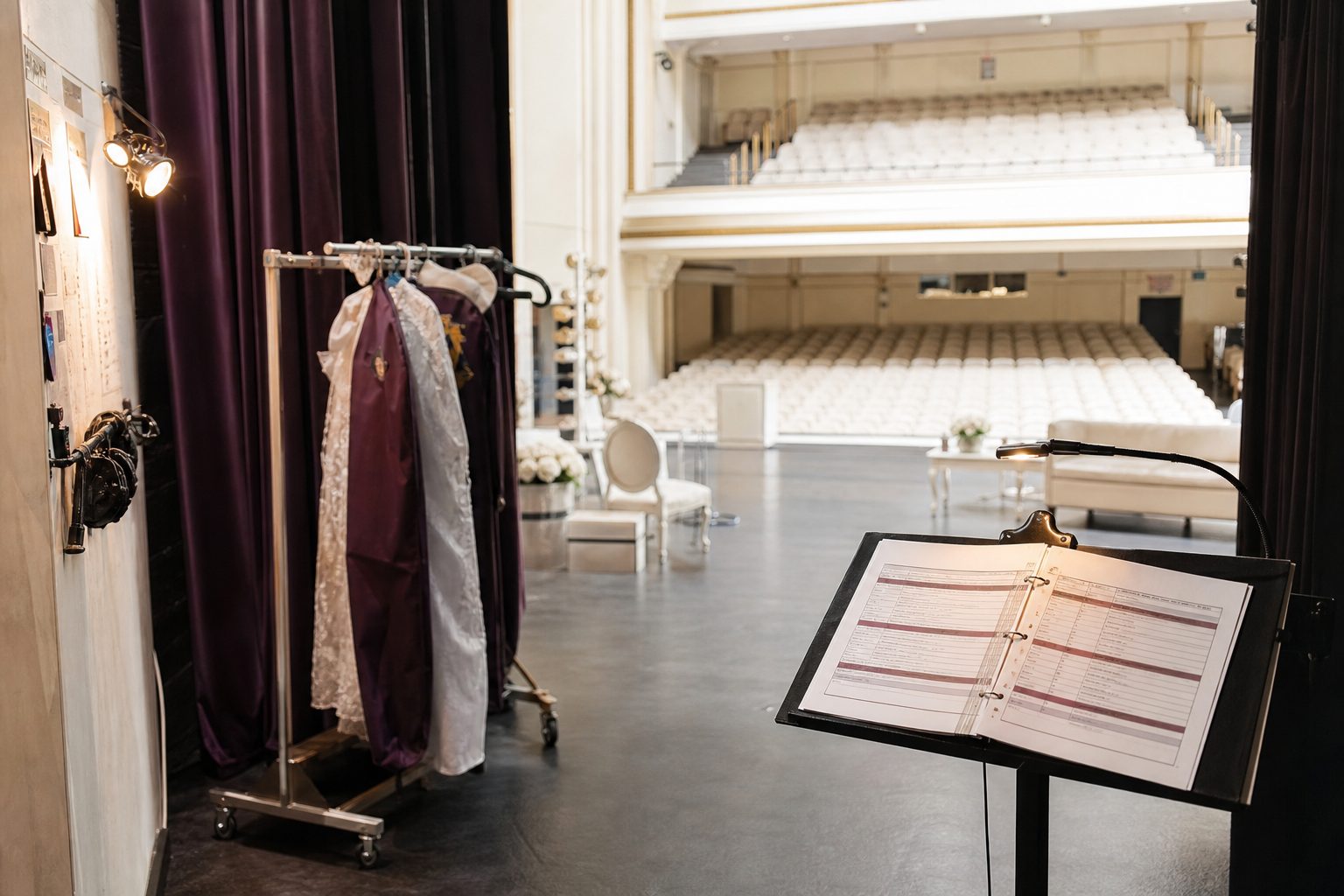
What should be on my checklist in the eight weeks before our spring recital day?
A week by week list running from costume arrival through strike, covering theater logistics, backstage staffing, tickets, rehearsal order and the paperwork that has to be done before anyone steps on stage.
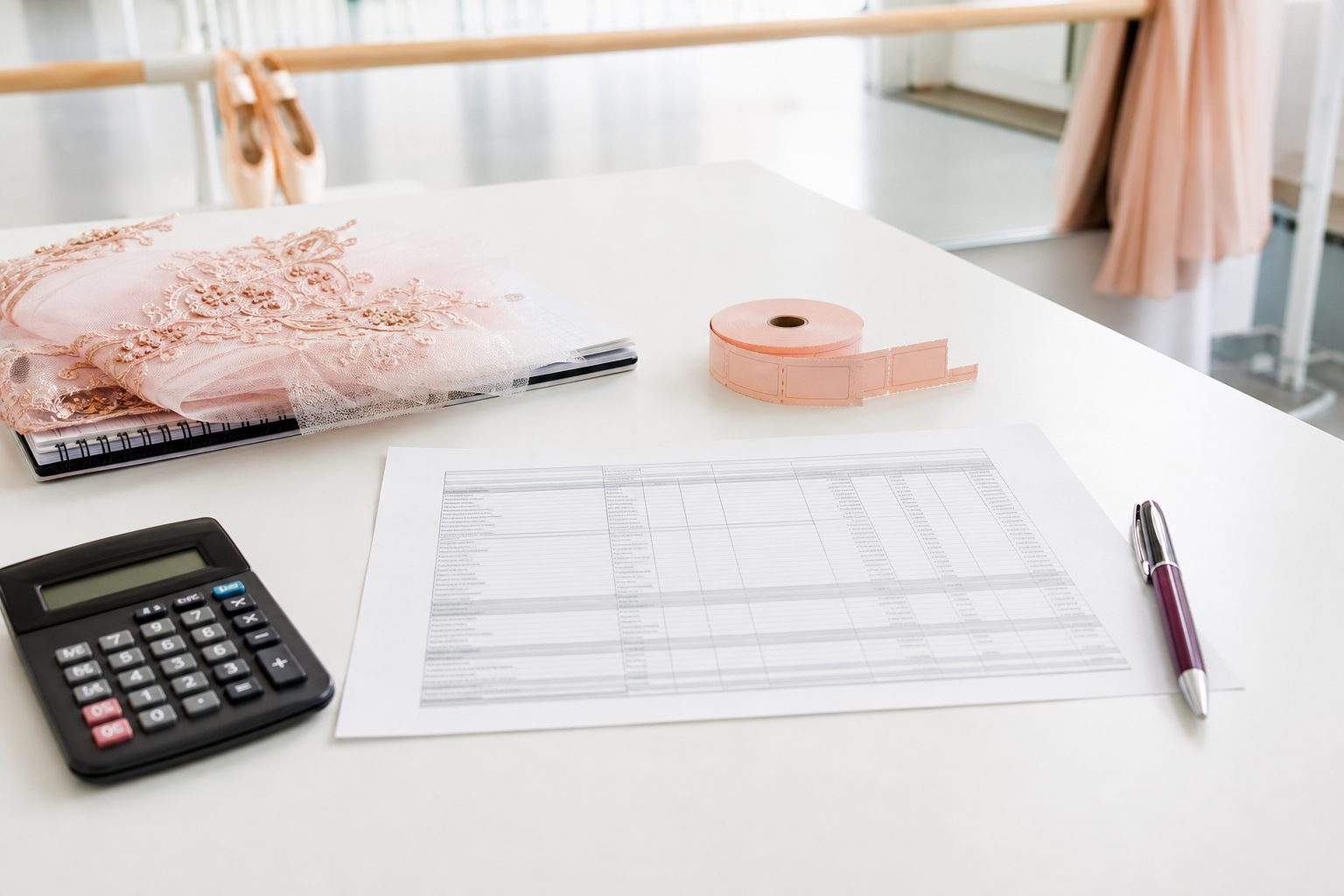
How much of my recital fee actually covers the theater, and where does the rest go?
A recital fee is not profit. Break it into venue rental, technical labor, licensing, costumes, printing and staffing so you can defend the number to parents and know your true margin.
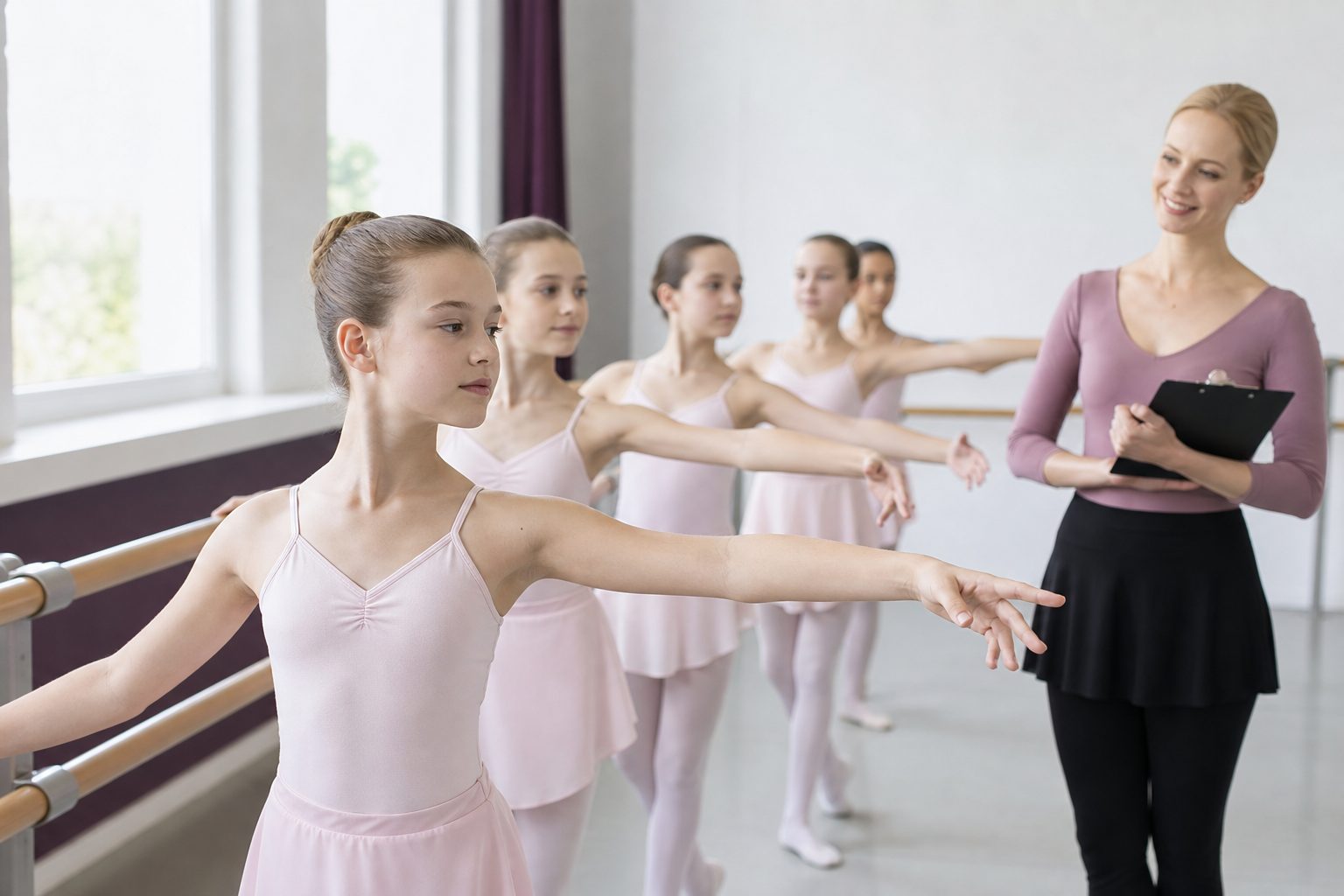
What actually happens on placement day when I move dancers up a level in ballet?
An hour by hour account of a placement session at a children's ballet school: what faculty watch for, how classes get balanced afterward, and how results reach families without a week of appeals.